A professional guide to NEMA 14-50, 6-50, 14-30, and 240V EV chargers
In North America and many other regions, EV charger performance is closely tied to outlet type and supply voltage. Search terms such as NEMA 14-50 EV charger, NEMA 6-50 EV charger, NEMA 14-30 EV charger, 240V EV charger, and 220V EV charger are frequently used, but they are often misunderstood or conflated.
This article provides a technically accurate, practical explanation of these outlet standards and how they relate to Level 2 EV charging.
A 240V EV charger (sometimes called a 220V EV charger) refers to a Level 2 AC charger powered by a split-phase or single-phase high-voltage residential supply.
A 240V charger delivers significantly more power than a standard 120V outlet and is the foundation of practical home EV charging.
NEMA (National Electrical Manufacturers Association) outlet types define:
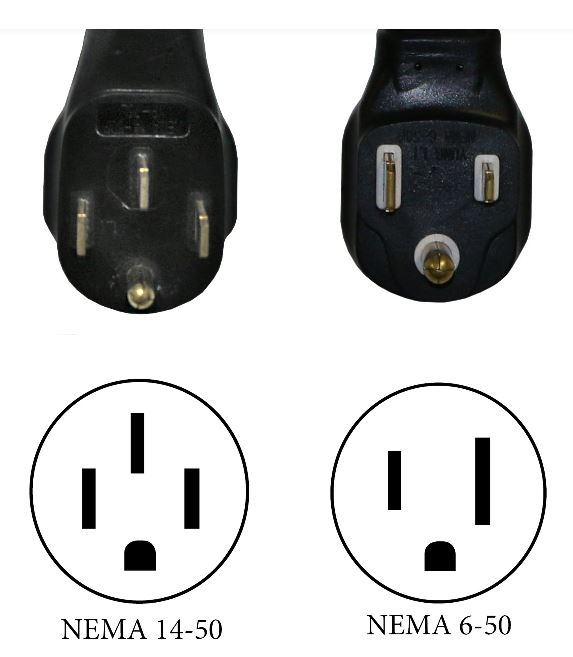
For EV charging, three NEMA outlets dominate residential and light-commercial installations.
A NEMA 14-50 EV charger is a Level 2 charger designed to plug into or be hardwired to a NEMA 14-50 outlet, one of the most common high-power outlets in North America.
For many homeowners, a NEMA 14-50 EV charger represents the best balance of charging speed, cost, and electrical availability.
A NEMA 6-50 EV charger connects to a 240V, 50A outlet without a neutral wire. This outlet type is commonly found in welding equipment installations.
Functionally, a NEMA 6-50 EV charger performs similarly to a NEMA 14-50 charger, but wiring requirements differ.
A NEMA 14-30 EV charger is designed for a 240V, 30A outlet, commonly used for electric dryers.
While slower than 14-50 or 6-50 options, a NEMA 14-30 EV charger still provides meaningful overnight charging for most daily driving needs.
| Outlet Type | Breaker | Continuous Amps | Approx. Power | Typical Use |
|---|---|---|---|---|
| NEMA 14-50 EV charger | 50A | 40A | ~9.6 kW | Home, RV-style installs |
| NEMA 6-50 EV charger | 50A | 40A | ~9.6 kW | Garage, welder circuits |
| NEMA 14-30 EV charger | 30A | 24A | ~5.7 kW | Dryer outlet charging |
Both approaches are considered 240V EV chargers, and the choice depends on electrical capacity and local code requirements.
All 240V / 220V EV chargers must comply with:
Using the correct NEMA outlet type is essential for safe, reliable, and insurable EV charging.
Choosing the correct outlet and voltage configuration ensures optimal charging speed, electrical safety, and long-term compatibility with evolving electric vehicle needs.
Lorem Ipsum is simply dummy text of the printing and typesetting industry
Complete guide to EV charger load management: dynamic load balancing, power sharing, static allocation. Wallbox, Autel, Emporia. Avoid panel upgrades...
Best Level 1 EV chargers for 120V outlet charging. Lectron dual-voltage, Tesla Mobile Connector, Emporia. Tips, costs, safety, when to...
Complete guide to scheduling EV charging: TOU rates, smart charger apps, solar surplus charging, cost savings calculator. Emporia, Wallbox, ChargePoint...




2 thoughts on “240V / 220V EV Chargers and NEMA Outlets Explained”