4
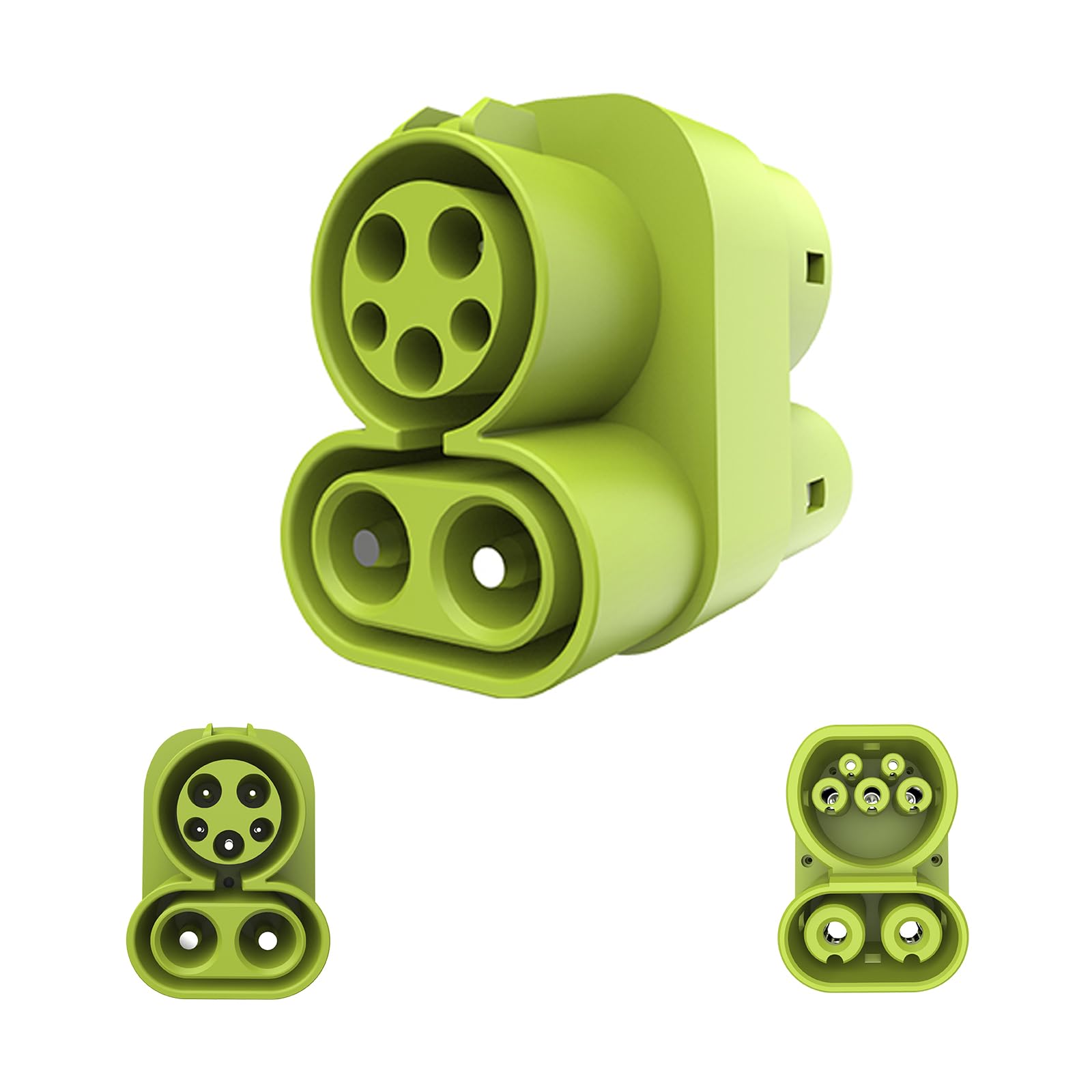
The CCS1 to CCS2 Adapter is a dual-mode AC/DC charging converter designed to bridge North American charging standards with European EV inlets. Supporting DC fast charging up to 250A / 1000V (250 kW max) and AC charging up to 32A, this adapter enables compatible European-spec EVs to charge reliably at U.S. CCS1 and J1772 (Type 1) stations—a practical solution for cross-market vehicles, imports, and travelers.
This dual compatibility eliminates the need for separate AC and DC adapters.
Important usage note: Fully insert the charging gun to the bottom of the adapter before initiating charging to ensure proper contact and communication.
This approach minimizes risk during high-power sessions.
Q1: Does this adapter support both AC and DC charging?
Yes. It supports AC (Type 1/J1772) up to 32A and DC (CCS1) up to 250A, with automatic mode switching.
Q2: Who is this adapter for?
Primarily for European-spec EVs (CCS2/Type 2 inlets) that need to charge at U.S. CCS1 or J1772 stations.
Q3: What charging speed will I get?
Up to 250 kW DC or 32A AC, depending on your vehicle’s limits and the station’s output.
Q4: What happens if it overheats?
Charging pauses at 85°C and resumes below 65°C. Some vehicles auto-resume; others require reconnecting.
Q5: Is correct insertion important?
Yes. Ensure the charging gun is fully seated to the bottom of the adapter before starting.
For cross-standard charging scenarios, this CCS1 to CCS2 Adapter offers a robust, travel-ready solution that combines high power, automatic mode switching, and active safety protections in one compact kit.
Further Reading: 240V / 220V EV Chargers and NEMA Outlets Explained
Affiliate Disclosure: EV Charger Experts is reader-supported. When you purchase through links on this page, we may earn an affiliate commission at no additional cost to you.
| Product | Max Output | Key Feature | Best For | Check Price |
|---|---|---|---|---|
| Emporia Level 2 | 48A / 11.5kW | Best value smart charger | Budget-conscious buyers | View on Amazon |
| Autel MaxiCharger 40A | 40A / 9.6kW | Premium build quality | Quality-focused buyers | View on Amazon |
| Wallbox Pulsar Plus | 48A / 11.5kW | Power Boost load management | Multi-EV households | View on Amazon |
| ChargePoint Home Flex | 50A / 12kW | Highest amperage output | Max charging speed | View on Amazon |
Lorem Ipsum is simply dummy text of the printing and typesetting industry
Complete guide to EV charger load management: dynamic load balancing, power sharing, static allocation. Wallbox, Autel, Emporia. Avoid panel upgrades...
Best Level 1 EV chargers for 120V outlet charging. Lectron dual-voltage, Tesla Mobile Connector, Emporia. Tips, costs, safety, when to...
Complete guide to scheduling EV charging: TOU rates, smart charger apps, solar surplus charging, cost savings calculator. Emporia, Wallbox, ChargePoint...




