
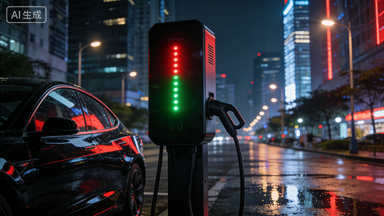
This guide explains the essential electrical and safety requirements for installing and using EV chargers at home or in commercial environments. Information reflects NEC standards, industry best practices, and modern EVSE design requirements.
View Recommended Level 2 Home ChargerYes. A Level 2 EV charger must be installed on a dedicated 240-volt circuit, typically 20A–60A depending on the charger rating. NEC (National Electrical Code) requires dedicated circuits because EV charging is considered a continuous load (3+ hours). A dedicated circuit prevents overheating, nuisance breaker trips, and electrical fire risks.
Most Level 2 EV chargers do not require a neutral wire. They use a two-hot + ground configuration (L1 + L2 + Ground) because EVSE delivers single-phase 240V power directly to the onboard charger inside the vehicle. Only some Level 1 (120V) chargers use a neutral.
The answer remains the same: • **Level 2** (NEMA 14-50, hardwired 40A–60A): Neutral is optional but usually unused. • **Level 1** (NEMA 5-15): Neutral is required for 120V operation. Modern EVSE units typically rely solely on the two hot legs for charging.
In the U.S., RCD (Residual Current Device) is equivalent to GFCI—Ground-Fault Circuit Interrupter. EV chargers require **ground fault protection**, but most Level 2 EVSE units already contain a built-in 20–30 mA CCID (Charge Circuit Interrupting Device). Therefore, an external RCD/GFCI breaker is usually not required and sometimes not recommended, unless local code mandates it.
It is highly recommended.
EV chargers contain sensitive electronics and are continuously connected to high-voltage circuits.
A whole-home surge protector or panel-mounted SPD (Surge Protection Device) protects against:
• Lightning-induced surges
• Utility grid switching
• Voltage spikes
Many electricians now consider SPDs standard practice for EV charger installations.
No—usually not.
Level 2 chargers include built-in CCID20 protection, which already performs the same function as a GFCI breaker.
Installing a GFCI breaker + a charger that already has CCID can create a “double-protection” issue, causing nuisance tripping.
Exceptions:
• Outdoor installations may require GFCI depending on local AHJ (Authority Having Jurisdiction).
• Some older homes may have unique code requirements.
Modern EV chargers are engineered to be extremely safe.
The charging connector does not carry live current until:
1. It is fully latched into the vehicle
2. The car verifies a safe ground
3. Communication handshake is complete (J1772 / NACS protocol)
Additional safety features:
• No exposed live metal
• Automatic shutoff if unplugged
• Temperature sensors in the connector
• Fault detection (ground fault, overcurrent, overvoltage)
• Weatherproof housings
Still, children should not play with charging cables. Treat cables like any other high-voltage equipment.
Lorem Ipsum is simply dummy text of the printing and typesetting industry
Complete guide to EV charger load management: dynamic load balancing, power sharing, static allocation. Wallbox, Autel, Emporia. Avoid panel upgrades...
Best Level 1 EV chargers for 120V outlet charging. Lectron dual-voltage, Tesla Mobile Connector, Emporia. Tips, costs, safety, when to...
Complete guide to scheduling EV charging: TOU rates, smart charger apps, solar surplus charging, cost savings calculator. Emporia, Wallbox, ChargePoint...




