EV Charger Industry Overview – Brands, Manufacturers & Business Opportunities
EV Charger Industry · Market & Careers

EV Charger Business & Industry: Brands, Market Landscape and Career Paths

A practical overview of the EV charging hardware market, with a focus on India and global players – plus where small businesses and individual professionals can fit into the value chain.

EV charging is no longer just a “nice to have” accessory around electric vehicles. It has become a complete industry with hardware manufacturers, software platforms, installers, CPOs (Charge Point Operators), e-mobility service providers, and financing partners. Understanding who does what – and where value is created – is critical if you want to sell chargers, invest in the sector, or build a career in it.

  • Who are the key EV charger manufacturers and brands?
  • How does the commercial market actually make money?
  • Where are realistic entry points for small businesses and professionals?

1. What is the best EV charger company in India?

There is no single “best” company for every use case. The right supplier depends on whether you are equipping homes, fleets, public DC fast-charging sites, or destination chargers (malls, hotels, offices). Broadly:

Home & workplace AC charging (Level 1 / Level 2)

  • Indian-focused brands: Tata Power EZ Charge, Exicom, Delta Electronics India, Magenta ChargeGrid, Statiq, Fortum India, and a growing number of regional OEMs.
  • Global brands active in India: ABB, Schneider Electric, Siemens, and others that supply AC wallboxes and pedestal chargers complying with Indian BIS and DISCOM norms.

DC fast charging & highway corridors

For high-power chargers (30–180 kW and above), operators often choose multinational industrial companies (ABB, Siemens, Delta, Exicom) that can supply robust DC hardware with service support and backend integration.

For a small business or individual installer, the practical question is: which manufacturers are empanelled with local utilities, have type-tested equipment, and can provide local after-sales support. Those are usually safer partners than unknown low-cost imports.

2. Top EV charger manufacturers in India

A non-exhaustive map of important players (brands may be both hardware manufacturers and network operators):

Segment Examples Typical Focus
Utility-backed & large networks Tata Power EZ Charge, BPCL, IOCL, HPCL, Jio-bp Public DC/AC, highways, city hubs, petrol pumps
Hardware-led manufacturers Exicom, Delta, ABB, Magenta, Amara Raja, Servotech OEM chargers, AC & DC hardware, OEM supply
Software-first / CPOs Statiq, Fortum, Blusmart (fleet), Kazam Apps, roaming, backend platforms, managed charging
Residential & workplace specialists Local EPCs, solar + EV integrators, housing-focus startups Society parking, office basements, villa projects

For entering the business, it is often easier to become a local installer, value-added reseller, or CPO using hardware from these manufacturers, rather than trying to build chargers from scratch.

3. What are the available “top EV chargers” on the market?

In practical terms, “top” usually means:

  • Certified to relevant safety standards (UL/CE/BIS, OCPP compatibility, local regulatory approvals).
  • Backed by a network or app with good uptime, transparent tariffs, and working customer service.
  • Reasonable total cost of ownership: hardware price + installation + maintenance + software fees.

AC home / workplace examples

In North America and Europe, products such as the ChargePoint HomeFlex Level 2 Charger are typical of “top tier” devices: they combine 240 V Level 2 charging, Wi-Fi connectivity, load-management features and integration with a large roaming network.

Check a Typical Premium Home Charger

For India or other emerging markets, look for similar features: ISI/BIS certification, OCPP support, and local service rather than focusing only on brand name.

4. Can we sell EV chargers separately in India?

Yes. EV chargers are typically sold through multiple channels:

  • Direct OEM sales: Manufacturers sell to fleet operators, DISCOMs, oil companies, real-estate developers, and government tenders.
  • Channel partners / dealers: Electrical distributors, solar EPCs, and specialist EV infra companies resell hardware and offer installation.
  • E-commerce & retail: Home wallboxes and portable chargers are sold via online platforms or electrical showrooms.

If you plan to sell chargers as a business, you typically need:

  • Distribution agreement or reseller authorization from one or more OEMs.
  • Basic technical capability (or subcontractors) to handle site survey, installation and after-sales.
  • Clarity about warranties, liability, and local electrical code compliance.

5. Owning an EV charger business – what does it really look like?

Does anyone own an EV charger business?

Yes – globally there are thousands of businesses built around EV charging. They range from:

  • Small local installers doing home and workplace wallbox projects.
  • Charge point operators (CPOs) running public AC and DC stations and monetizing usage.
  • Networks and software platforms that run apps, payments, and roaming (CPMS / EMSP).
  • Hardware OEMs that design and manufacture the chargers themselves.

What is a realistic career in EV chargers in India?

You do not have to be a car OEM to participate. Typical career and business paths include:

  • Electrical contractor / installer: Specialize in EVSE, become certified by one or more brands, and partner with dealers, housing societies, and OEMs.
  • Site host & mini-CPO: Own or lease locations (parking lots, malls, hotels, fuel stations) and host chargers under a revenue-share model with a larger network operator.
  • Sales & channel development: Work for charger OEMs or networks building dealer networks and B2B sales.
  • Software & data roles: Backend, app development, billing/settlement, and grid-aware smart charging.

Key skills and capabilities that are in demand

  • Strong grounding in electrical safety, earthing, protection devices, and local codes.
  • Familiarity with EV standards (AC Type 2, CCS2, CHAdeMO, J1772, OCPP).
  • Basic networking & IT skills: configuring routers, SIMs, Wi-Fi, and cloud-connected chargers.
  • Ability to design transparent, sustainable pricing models for public/commercial sites.

6. Practical checklist if you want to enter the EV charger market

Whether you are in India, the US, or elsewhere, the entry logic is similar. Before committing capital:

Market & positioning

  • Decide your focus: home, workplace, fleets, public DC, destination, or mixed.
  • Check local EV adoption trends, government incentives, and DISCOM policies.
  • Understand competing networks in your target geography.

Technology & partners

  • Select 1–3 charger OEMs that are certified, bankable and can provide local support.
  • Confirm interoperability: plug standards, payment options, roaming, OCPP support.
  • Clarify warranty, SLAs, replacement time for critical components.

Financial model

  • Estimate CAPEX: hardware + installation + permits + civil works + grid upgrades.
  • Estimate OPEX: demand charges, electricity tariffs, software fees, maintenance.
  • Model realistic utilization (e.g., 5–20% in early years) and payback windows.

7. Using a reference home charger to learn the ecosystem

Studying a mature product such as the ChargePoint HomeFlex Level 2 Charger can help you understand how hardware, software, and business models come together in developed markets:

  • Supports faster Level 2 charging vs. a standard 110 V outlet.
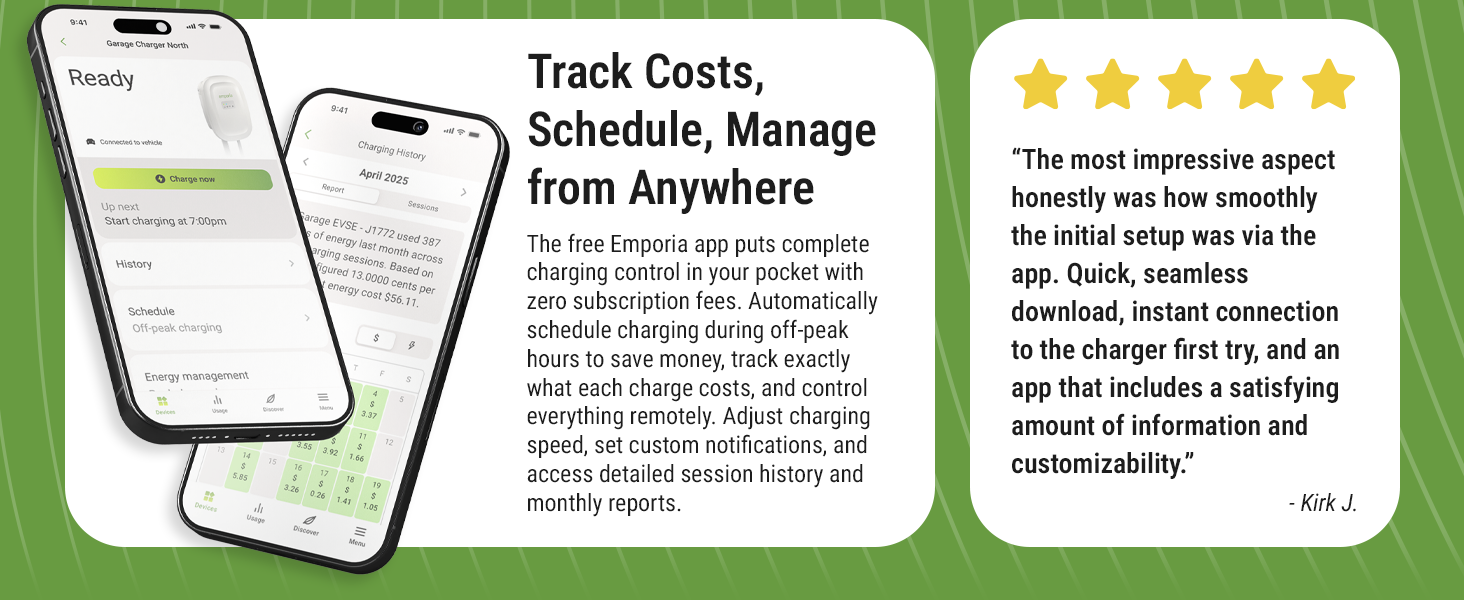
  • Integrates with a large public network and app for monitoring and control.
  • Demonstrates how warranties, certifications and customer support are packaged.
Explore ChargePoint HomeFlex

Even if you work in India or other regions, comparing local products to such benchmarks helps you design more competitive offerings and avoid under-specifying hardware or software.

Hardware Benchmark Smart Charging Business Model Insight

Leave a Reply

Your email address will not be published. Required fields are marked *

Related Blogs

Lorem Ipsum is simply dummy text of the printing and typesetting industry

Lectron NEMA 14-50 Socket Splitter – Smart Power Sharing for Level 2 EV Chargi …

Lectron NEMA 14-50 Socket Splitter – Smart Power Sharing for Level 2 EV Charging & Home Appliances The Lectron NEMA...

Tesla Extension Cord 21ft (NACS) – 50A / 12kW High-Power EV Charging Extension …

Tesla Extension Cord 21ft (NACS) – 50A / 12kW High-Power EV Charging Extension for Model 3 / Y / S...

VEVOR J1772 EV Charger Extension Cable – 40A, 40ft, Level 1 & Level 2 (120 …

VEVOR J1772 EV Charger Extension Cable – 40A, 40ft, Level 1 & Level 2 (120V–240V) 4 The VEVOR EV Charger...