
The cost varies widely based on electrical panel capacity, wiring distance, and labor. Typical home installations in North America range from $300 to $1,500. If a panel upgrade or running new conduit is required, costs can increase to $1,500–$3,000+.
“DIY” charging is not recommended because certified safety circuits and communication protocols are required. The safest approach for a low-power solution is to use a certified Level 1 or portable Level 2 EVSE with a proper outlet (120V or 240V) installed by a qualified electrician.
Yes. Modern EV chargers and vehicles are designed to remain connected. Once the battery reaches the programmed limit, the EVSE and vehicle stop drawing current. Leaving the charger plugged in poses no inherent risk as long as the installation meets electrical code.
Barriers include upfront cost, limited electrical capacity, leaseholder/HOA approval, unclear cost-sharing models, and the need for ongoing maintenance. Incentives and utility rebates are improving adoption, but planning and management complexity remain hurdles.
Quality EV chargers are engineered for ambient conditions. Many units carry ratings like IP65/66 or NEMA 4, meaning they resist rain, dust, and moderate temperature ranges. In extreme heat or cold, performance may slow due to thermal management, but certified units maintain safe operation within their rated temperature ranges.
Street parking EV installation costs often exceed home installs because trenching and utility upgrades may be needed ($1,500–$5,000+). Preventing unauthorized use typically requires user authentication (RFID/app) and networked EVSE services that bill or restrict access.
No. EVs are designed for a single charging inlet at a time. Connecting multiple chargers simultaneously is unsafe and not supported by any production EV or charging standard.
MG Motor India has collaborated with charging network partners like Tata Power EZ Charge and others to deploy home and public fast chargers. OEM partnerships help ensure wider and branded EV charging access for customers.
No. An EV charger draws energy from your electrical panel to the vehicle; it is not a generation source. Some EVs with bidirectional capability (V2H) can supply limited household loads during outages, but this is separate from the EVSE itself.
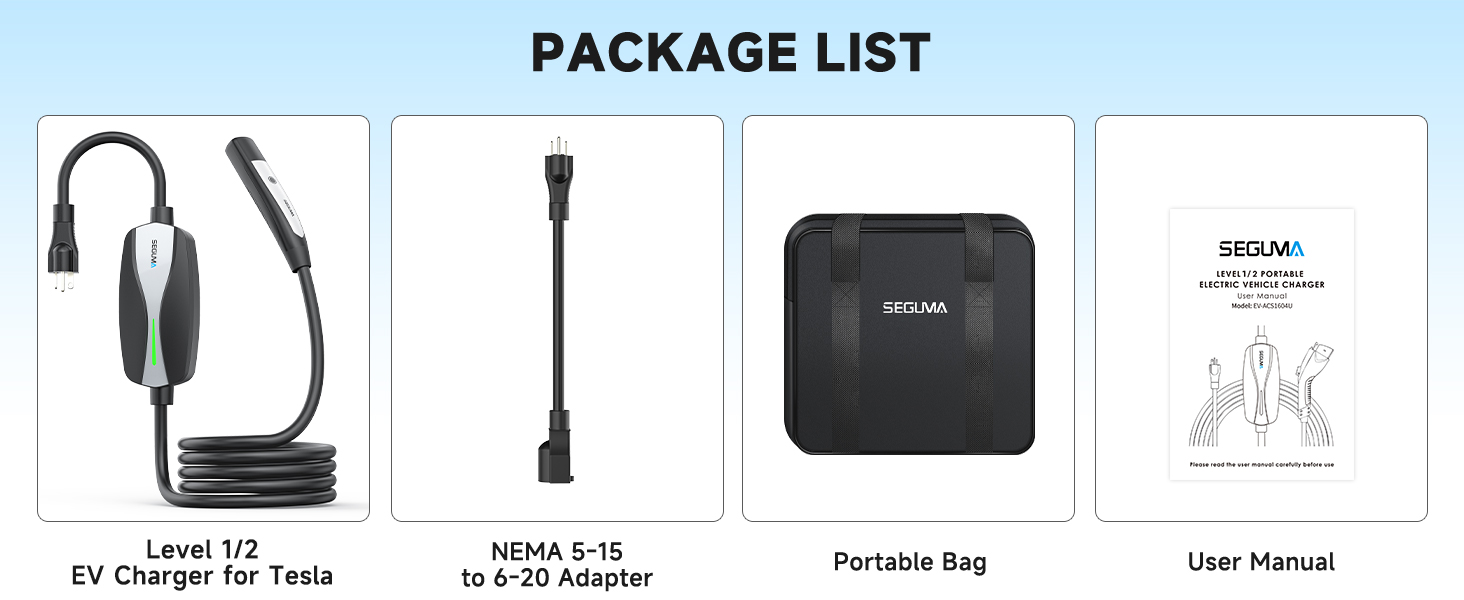
Seguma 12A/16A Tesla Charger — A dual-voltage portable charger for Tesla vehicles, offering both Level 1 and Level 2 charging via NEMA 5-15 (120V) and 6-20 (240V). Wireless charge port control, built-in protections, 25 ft cable, and travel convenience make it ideal for home users, road trips, and rentals.
Lorem Ipsum is simply dummy text of the printing and typesetting industry
2026 Rivian R2 & R3 Home Charging Guide: Everything You Need to Know Affiliate Disclosure: EVChargerExperts is supported by its...
# 2026 Rivian R2 & R3 Home Charging Guide: Everything You Need to Know *Affiliate Disclosure: EVChargerExperts is supported by...
*Affiliate Disclosure: EVChargerExperts is supported by its audience. When you buy through links on our site, we may earn an...




