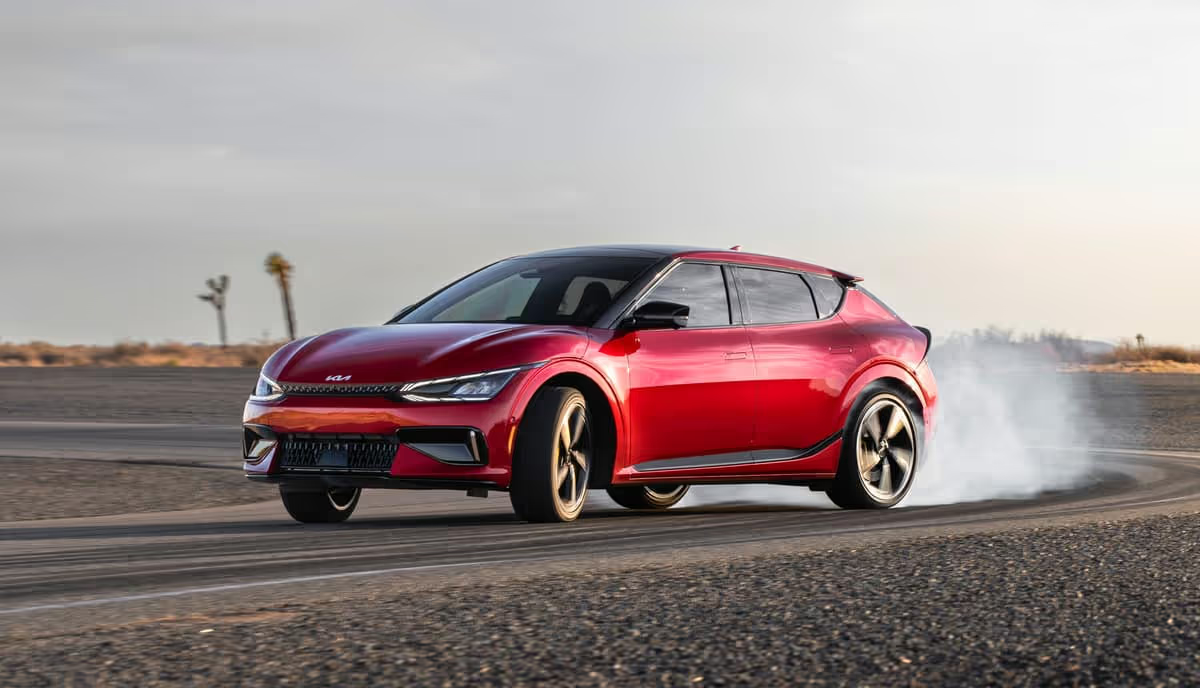
Kia’s electric vehicles focus on usability, fast charging capability, and long-term reliability. Models such as the Kia EV6 and Kia Niro EV are designed around North American charging standards, using J1772 for Level 1/2 AC charging and CCS for DC fast charging.
The Kia EV6 is built on the E-GMP platform, supporting both 400V and 800V charging. This enables ultra-fast DC charging on compatible stations while maintaining excellent efficiency on Level 2 home chargers for daily charging.
For everyday use, Kia recommends home Level 2 charging and limiting DC fast charging to longer trips. Keeping the battery between roughly 20% and 80% during daily use helps preserve long-term battery health.
The Niro EV is optimized for efficiency rather than extreme charging speeds. Its battery size allows most owners to fully recharge overnight using a Level 2 home charger, making it ideal for urban and suburban driving.
Consistent home charging at moderate power levels reduces thermal stress. Scheduling charging during off-peak hours can significantly lower electricity costs while maintaining stable battery performance.
Both the Kia EV6 and Niro EV use the J1772 standard for AC charging. A reliable, smart Level 2 charger offers the best balance of speed, safety, and convenience for long-term ownership.
ChargePoint HomeFlex Level 2 EV Charger (J1772, Hardwired)
Fast, reliable, and fully compatible with Kia EV6 & Niro EV
Kia EVs combine advanced charging technology with practical daily usability. Pairing an EV6 or Niro EV with a dependable Level 2 home charger ensures faster charging, lower operating costs, and improved battery longevity— a key advantage for long-term electric vehicle ownership.
Lorem Ipsum is simply dummy text of the printing and typesetting industry
Complete guide to EV charger load management: dynamic load balancing, power sharing, static allocation. Wallbox, Autel, Emporia. Avoid panel upgrades...
Best Level 1 EV chargers for 120V outlet charging. Lectron dual-voltage, Tesla Mobile Connector, Emporia. Tips, costs, safety, when to...
Complete guide to scheduling EV charging: TOU rates, smart charger apps, solar surplus charging, cost savings calculator. Emporia, Wallbox, ChargePoint...




