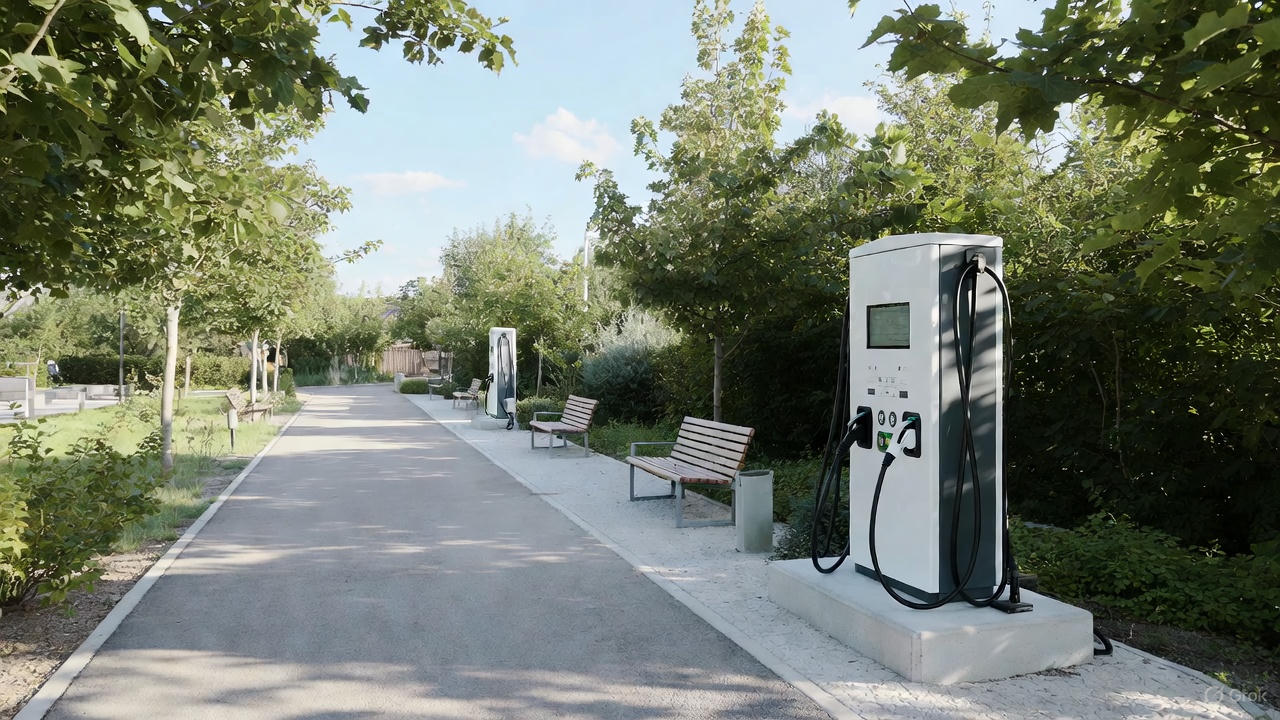
Compatibility depends on the connector standard used by your vehicle. Most modern electric vehicles sold in North America use a standardized AC charging connector for Level 1 and Level 2 charging. As long as the charging station supports that standard, it will be physically and electrically compatible.
It is also important to distinguish between AC charging and DC fast charging. Home and destination charging stations provide AC power, which is converted by the vehicle’s onboard charger. Connector compatibility for AC charging is generally straightforward compared to DC fast charging systems.
The charger included with a vehicle is typically designed for basic charging using a standard household outlet. While convenient, this method delivers limited power and results in long charging times.
A Level 2 charging station operates at a higher voltage and current, allowing the vehicle to recharge significantly faster. For drivers with daily commuting needs, limited overnight charging windows, or larger battery packs, a Level 2 station provides far greater practicality and flexibility.
Charging stations differ in several key areas:
At a fundamental level, all charging stations deliver regulated AC power. Differences lie in performance limits, installation flexibility, safety certifications, and long-term reliability.
Smart charging stations add software-based features on top of basic charging functionality. These may include scheduled charging, energy usage tracking, load management, and remote monitoring.
While these features can improve convenience and energy optimization, they are not strictly required for safe or effective charging. A charging station without smart functionality can still reliably charge a vehicle if sized and installed correctly.
The required power level depends on your vehicle’s onboard charger capacity, daily driving distance, and available electrical infrastructure. Installing a higher-power station does not necessarily result in faster charging if the vehicle cannot accept the additional power.
For most residential users, a station that can fully recharge typical daily usage overnight provides an optimal balance between performance, cost, and electrical demand.
Charging speed depends on three factors: the station’s power output, the vehicle’s onboard charger limit, and current battery conditions. Under typical conditions, a Level 2 station can replenish a substantial portion of the battery during an overnight charging session.
Actual charging speed may vary due to temperature, battery state of charge, and electrical supply constraints.
Yes, provided the charging station is designed and rated for outdoor use. Outdoor installations require weather- resistant enclosures, proper grounding, and compliance with local electrical codes.
Placement should also consider protection from physical damage, water pooling, and accidental strain on the cable.
The ideal cable length allows comfortable access to the vehicle’s charge port without excessive slack. A cable that is too short limits parking flexibility, while an overly long cable can be cumbersome and increase wear.
Choosing a length that accommodates different parking orientations while remaining manageable improves long-term usability and safety.
While theft is uncommon, it is possible. Outdoor installations should be securely mounted and located in visible, well-lit areas when feasible.
Physical mounting hardware, fixed wiring, and thoughtful placement significantly reduce the likelihood of removal or tampering.
Warranties typically cover defects in materials and workmanship under normal use. This may include internal electronics, enclosures, and charging cables.
Damage caused by improper installation, misuse, unauthorized modification, or external factors such as flooding or impact is generally excluded. Always review warranty terms carefully before installation.
Drivers who charge in multiple locations should prioritize consistency and convenience. This may involve ensuring that each location has compatible electrical infrastructure and sufficient charging capacity.
Planning ahead reduces reliance on emergency charging and ensures predictable charging behavior regardless of location. Infrequently used locations may only require slower charging, while primary residences often benefit from higher-capacity installations.
Selecting and using a charging station is less about brand and more about matching power, installation conditions, and daily driving needs. A well-chosen charging station provides safe, reliable charging and integrates smoothly into everyday routines without unnecessary complexity.
Lorem Ipsum is simply dummy text of the printing and typesetting industry
2026 Rivian R2 & R3 Home Charging Guide: Everything You Need to Know Affiliate Disclosure: EVChargerExperts is supported by its...
# 2026 Rivian R2 & R3 Home Charging Guide: Everything You Need to Know *Affiliate Disclosure: EVChargerExperts is supported by...
*Affiliate Disclosure: EVChargerExperts is supported by its audience. When you buy through links on our site, we may earn an...




