A SEO- and GEO-optimized FAQ guide for electric vehicle charging
This post expands on core EV charging knowledge using a question-and-answer (FAQ) structure, designed to be search-engine friendly (SEO) and geographically adaptable (GEO) for North America, Europe, and other regulated markets. It focuses on the most commonly searched terms related to Level 1, Level 2, and Level 3 / DC fast chargers.
A Level 2 EV charger (also referred to as ev charger level 2, level 2 electric vehicle charger, or level 2 car charger) is an AC charging system that operates at 208–240 volts. It supplies significantly more power than Level 1 charging and is the most widely adopted solution for home, workplace, and public destination charging.
Level 2 EV charging typically delivers 3.3 kW to 19.2 kW, depending on:
In practical terms, a Level 2 charger can add 20–40 miles (30–65 km) of range per hour, making overnight or workday charging realistic for most EV drivers.
Yes. Level 2 EV chargers are considered the standard for residential charging. They require:
From a cost-performance perspective, Level 2 chargers offer the best balance between charging speed, installation cost, and grid impact.
There is no technical difference.
“Level 2 EV charger,” “level2 ev charger,” “charger level 2,” and similar variations are search and naming variants used in listings, documentation, and online content. All refer to the same charging class.
A Level 1 EV charger (also called ev charger level 1 or level1 ev charger) uses a standard household outlet and supplies 120 V AC power. In most cases, it is the charging cable provided with the vehicle at purchase.
Level 1 charging typically delivers 1–2 kW, translating to:
This makes Level 1 charging suitable only for:
Level 1 charging is appropriate when:
However, for most EV owners, Level 1 charging becomes impractical as battery capacities increase.
A Level 3 EV charger, commonly known as a DC fast charger, supplies direct current (DC) directly to the vehicle’s battery, bypassing the onboard charger. This allows for much higher power delivery than AC systems.
DC fast chargers typically operate in the range of:
Under optimal conditions, a DC fast charger can charge an EV from 20% to 80% in 20–40 minutes, depending on vehicle design and battery chemistry.
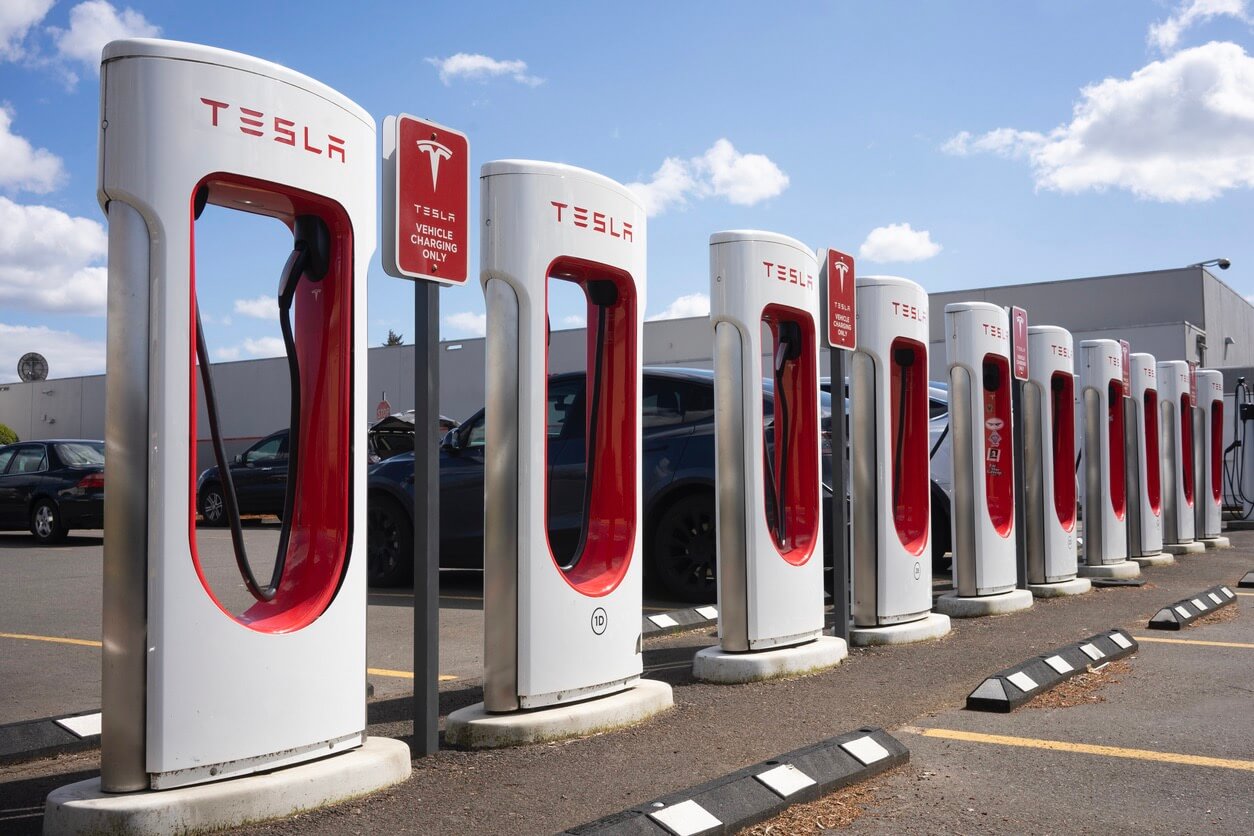
Yes. The Tesla Supercharger network is a proprietary form of Level 3 / DC fast charging, designed specifically for Tesla vehicles. While the technology class is DC fast charging, compatibility and access rules vary by region and vehicle type.
DC fast charging is generally unsuitable for residential use due to:
For these reasons, DC fast chargers are primarily deployed along highways, in urban hubs, and at fleet depots.
| Charging Level | Typical Voltage | Power Range | Best Use Case |
|---|---|---|---|
| Level 1 | 120 V AC | ~1–2 kW | Backup / low daily mileage |
| Level 2 | 208–240 V AC | ~3–19 kW | Home, workplace, destination |
| Level 3 (DC) | High-voltage DC | ~25–350+ kW | Highway, public fast charging |
From an infrastructure and user-experience standpoint:
For most regions and use cases, Level 2 EV charging is the most practical and scalable solution, while DC fast charging plays a strategic but complementary role in the broader EV charging ecosystem.
This layered charging model is fundamental to understanding how electric vehicle charging systems are deployed, regulated, and optimized worldwide.
Lorem Ipsum is simply dummy text of the printing and typesetting industry
# 2026 Rivian R2 & R3 Home Charging Guide: Everything You Need to Know *Affiliate Disclosure: EVChargerExperts is supported by...
*Affiliate Disclosure: EVChargerExperts is supported by its audience. When you buy through links on our site, we may earn an...
*Affiliate Disclosure: EVChargerExperts is supported by its audience. When you buy through links on our site, we may earn an...




