A detailed look into why EV chargers fail, how to maintain them properly, and why high-quality Level 2 chargers cost more. This information applies to home charging stations, public networks, and commercial EVSE installations.
View Top-Rated Level 2 Home Chargers
EV chargers (EVSE) fail primarily due to **environmental exposure, electronic degradation, improper installation, and user-induced stress**.
Leading causes include:
• Weather exposure (rain, heat cycles, UV): weakens seals, causes corrosion
• Thermal stress: rapid heating/cooling damages internal boards
• Poor-quality components in low-cost chargers
• Overloading circuits or insufficient wiring
• Connector wear after thousands of plug/unplug cycles
• Firmware failures due to incomplete OTA updates
• Public charger vandalism or improper cable handling
Commercial DC fast chargers fail more often because they contain **high-voltage rectifiers, cooling systems, contactors, and multiple communication modules**, all of which increase failure probability.
Tesla charging issues can be reported through:
• The Tesla mobile app → Charging → Report Issue
• QR codes located on many newer Superchargers
• Tesla customer support hotline
• In-car touchscreen → Service → Charging
Stations automatically send diagnostic data to Tesla, but user reports help verify on-site issues like damaged cables or blocked stalls.
Yes—Tesla has one of the fastest repair response systems globally.
Most Supercharger failures are resolved within **24–72 hours**, driven by:
• Automated remote diagnostics
• Predictive maintenance alerts
• Regional service crews
• On-site spare components
Public networks (ChargePoint, Evgo, Electrify America) vary significantly. Some repair within days; others take weeks due to third-party ownership, permitting delays, or limited technician coverage.
Home EV chargers are low-maintenance but benefit from routine checks:
Monthly:
• Inspect cable for cracks, heat spots, or abrasion
• Check plug and outlet for discoloration (sign of overheating)
• Ensure ventilation space is unobstructed
Every 6–12 months:
• Tighten terminal screws (for hardwired units; done by an electrician)
• Check GFCI/CCID function via built-in test button
• Clean dust buildup from vents
Avoid:
• Wrapping cables tightly (causes internal wire fatigue)
• Leaving connectors on the ground
• Exposing chargers to direct sprinklers or pressure washers
High-quality EVSE units like Emporia, ChargePoint, and EVIQO integrate temperature sensors, surge protection, and moisture monitoring, reducing failure probability.
The cost reflects the complexity and safety requirements of EVSE technology.
EV chargers are not simple power outlets; they are **communication, safety, and load-management devices** designed to operate under continuous high current.
Key cost drivers include:
• High-grade electronics for 240V continuous operation
• Temperature, moisture, and ground-fault safety systems
• UL/ETL certification fees and compliance testing
• Heavy-duty cables rated for 10,000+ cycles
• Enclosures built for IP66/NEMA 4 weather sealing
• Smart features (Wi-Fi, apps, OTA updates, metering)
DC fast chargers are even more expensive because they require:
• Multi-kilowatt rectifiers
• Liquid cooling systems
• Three-phase transformers
• High-power contactors
Home chargers are becoming more affordable, but premium models cost more due to quality components and reliability.
Lorem Ipsum is simply dummy text of the printing and typesetting industry

Lectron NEMA 14-50 Socket Splitter – Smart Power Sharing for Level 2 EV Charging & Home Appliances The Lectron NEMA...
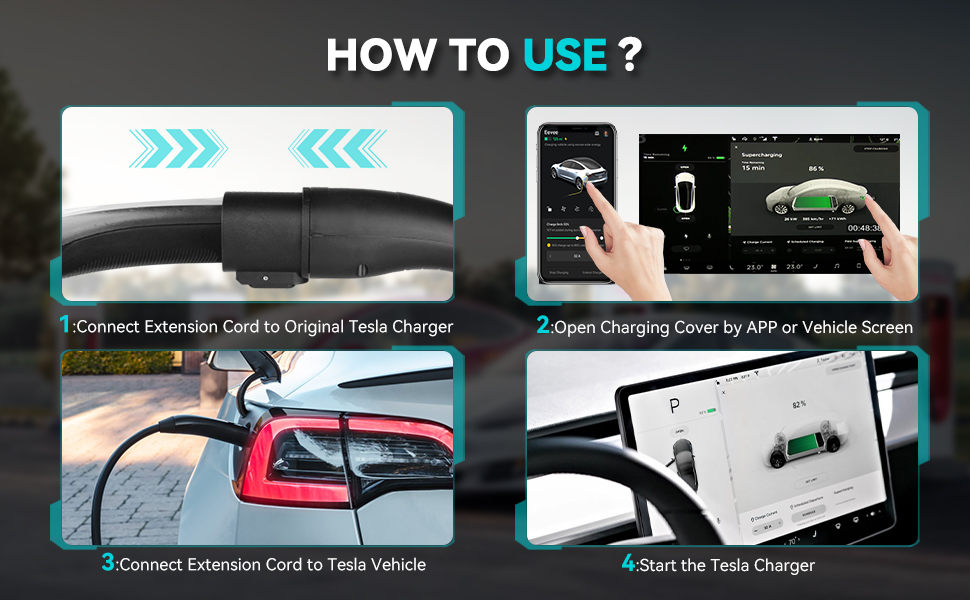
Tesla Extension Cord 21ft (NACS) – 50A / 12kW High-Power EV Charging Extension for Model 3 / Y / S...
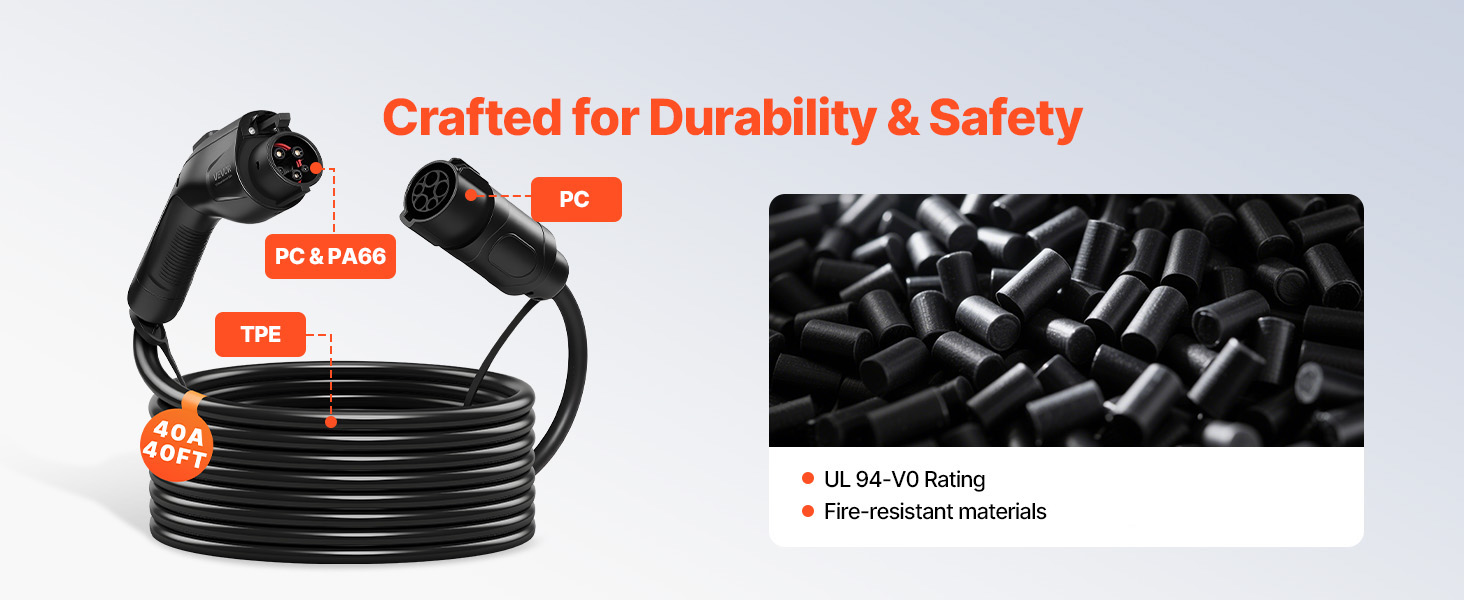
VEVOR J1772 EV Charger Extension Cable – 40A, 40ft, Level 1 & Level 2 (120V–240V) 4 The VEVOR EV Charger...




