
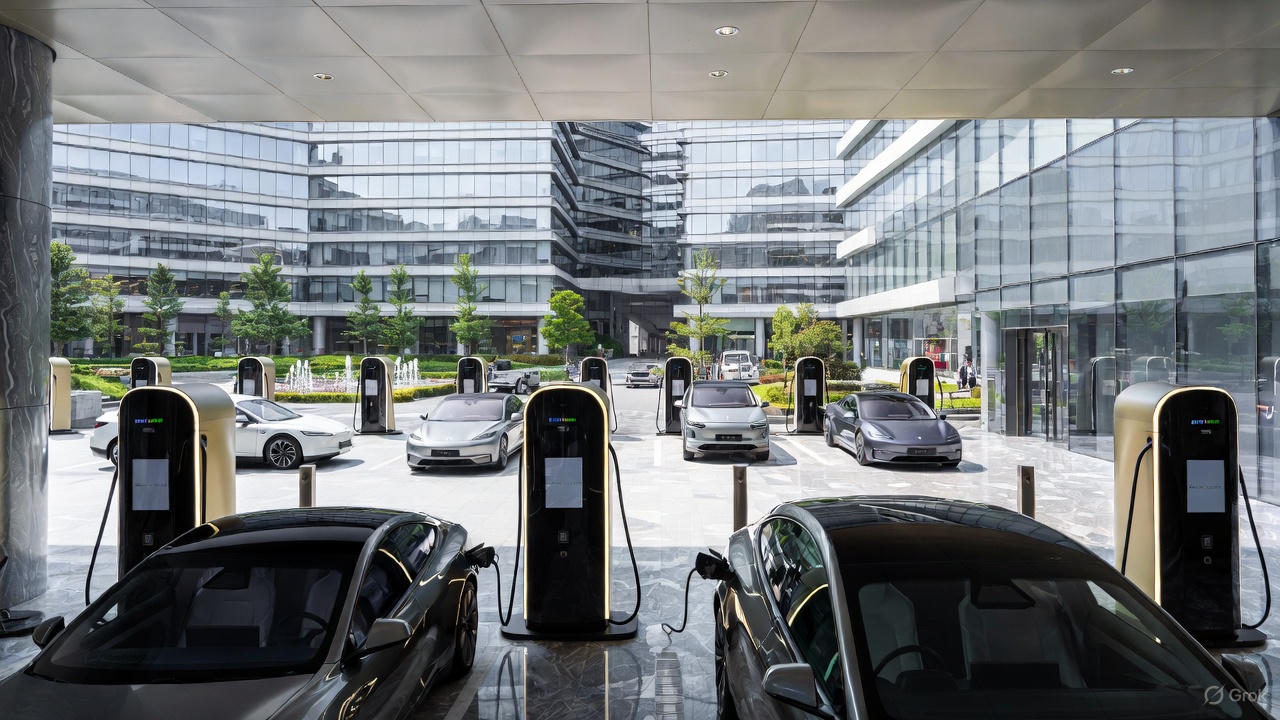
The cost of installing a home EV charger depends on your electrical setup and property type. A standard installation is typically included when purchasing a charger through an installer, while non-standard work may incur additional costs.
A standard installation usually includes:
Some EV charger installation packages and smart tariffs are only available to Octopus Energy customers. However, it is still possible to install an EV charger independently without switching energy supplier.
Yes, but you will usually need written permission from the property owner or landlord. In some cases, chargers can be removed when you move out.
A remote survey typically requires:
Yes, but your electrical supply must be able to support the additional load. A qualified electrician may need to assess your system before approval.
A looped supply means your electricity supply is shared with a neighbouring property. In some cases, the Distribution Network Operator may need to separate the supply before an EV charger can be installed.
The DNO is the company responsible for maintaining the local electricity network. They manage the cables supplying electricity to your home and may need to be notified when an EV charger is installed.
Account credit may be applied in some cases, depending on your tariff and installation package. This is subject to eligibility and confirmation at the time of purchase.
Yes. Unless access is restricted, anyone with a compatible vehicle can use your charger. Some chargers allow locking or access control via an app.
A typical EV home charger installation takes around 4 hours. The process usually includes:
Installers may provide instructional videos or guides before installation.
Waiting times vary depending on installer availability, survey completion, and whether additional electrical work is required.
In many cases, the installer will notify the DNO on your behalf. Some higher-power chargers require prior approval.
Most residential installations do not require planning permission. However, listed buildings or flats may require additional approval.
You will need a compatible smart meter, an eligible EV, and a supported smart charger or vehicle integration.
Grant availability depends on government policy and eligibility criteria. Some schemes are aimed at renters, landlords, or workplaces.
A tethered charger has a fixed charging cable attached. An untethered charger requires you to use your own cable.
Cable size depends on charger power, distance, and installation method. This is determined by the electrician during the survey.
Type 1 and Type 2 are AC connectors. CCS is a DC fast charging connector used for rapid charging.
Most home chargers deliver 7 kW AC power and are compact enough for wall mounting. Exact dimensions vary by manufacturer.
Yes, but this is known as Level 1 charging and is much slower than using a dedicated EV charger.
Most UK home chargers use up to 7 kW. Actual consumption depends on vehicle demand and charging settings.
Existing cabling may be reused if it meets current safety and capacity requirements. This must be confirmed by the installer.
Many modern chargers include built-in protection. Additional surge protection may be required depending on local regulations.
Bonding ensures electrical safety by connecting metal parts to earth. Whether it is required depends on your installation setup.
A fused isolator allows safe disconnection of the charger for maintenance. It is often installed as part of a compliant EV charger installation.
Lorem Ipsum is simply dummy text of the printing and typesetting industry
# 2026 Rivian R2 & R3 Home Charging Guide: Everything You Need to Know *Affiliate Disclosure: EVChargerExperts is supported by...
*Affiliate Disclosure: EVChargerExperts is supported by its audience. When you buy through links on our site, we may earn an...
*Affiliate Disclosure: EVChargerExperts is supported by its audience. When you buy through links on our site, we may earn an...




