The MEGEAR Skysword II is a representative 16A portable EV charger: 100 to 240V support, a NEMA 6-20 plug for 240V and a NEMA 5-15 adapter for 120V, and a 23ft cable. It is the kind of device that makes EV ownership painless for renters, commuters, and travelers who want one charger for every outlet. This review covers what the Skysword II class offers, real-world speeds, who should buy it, and our verified 16A pick for reliable daily use.
The core appeal is dual-voltage flexibility. On 240V (NEMA 6-20) it adds about 13 to 15 miles per hour; on 120V (NEMA 5-15) it adds about 6 to 7. The 23ft cable reaches most parking layouts. For a dependable everyday unit, our pick is the 16A 17ft portable, and the 25ft version if your outlet is far. Our portable charger explained guide covers the basics.
| Plug | Power | Range / hour |
|---|---|---|
| 5-15 (120V) | 1.92 kW | ~6 to 7 mi |
| 6-20 (240V) | 3.84 kW | ~13 to 15 mi |
On 240V, a 16A portable covers a typical daily commute overnight. On 120V it is slow but universal, ideal as a backup.
While the Skysword II is a capable example, we recommend a certified 16A portable with both plugs built in: the 16A 17ft portable on Amazon for typical parking, or the 25ft version when the outlet is distant. Both are J1772 for non-Tesla EVs; Tesla drivers add a J1772-to-NACS adapter. Our best portable roundup compares the field.
Every 16A portable here is standard J1772 for non-Tesla EVs. Tesla drivers add a J1772-to-NACS adapter, or choose a portable with a native NACS connector. Our adapter guide covers safe options.
| Option | Speed | Best for |
|---|---|---|
| 16A portable | ~13 to 15 mi/hr | Daily, rentals, travel backup |
| 40A portable | ~30+ mi/hr | Road trips, RV parks |
A 16A unit is lighter and cheaper and enough for most people; step up to 40A only if you need maximum portable speed on the road.
Electricity is the same as any home charging, about $0.16/kWh, or roughly $12 for a 75 kWh fill. A portable just reaches the outlet wherever it is. Our cost guide explains.
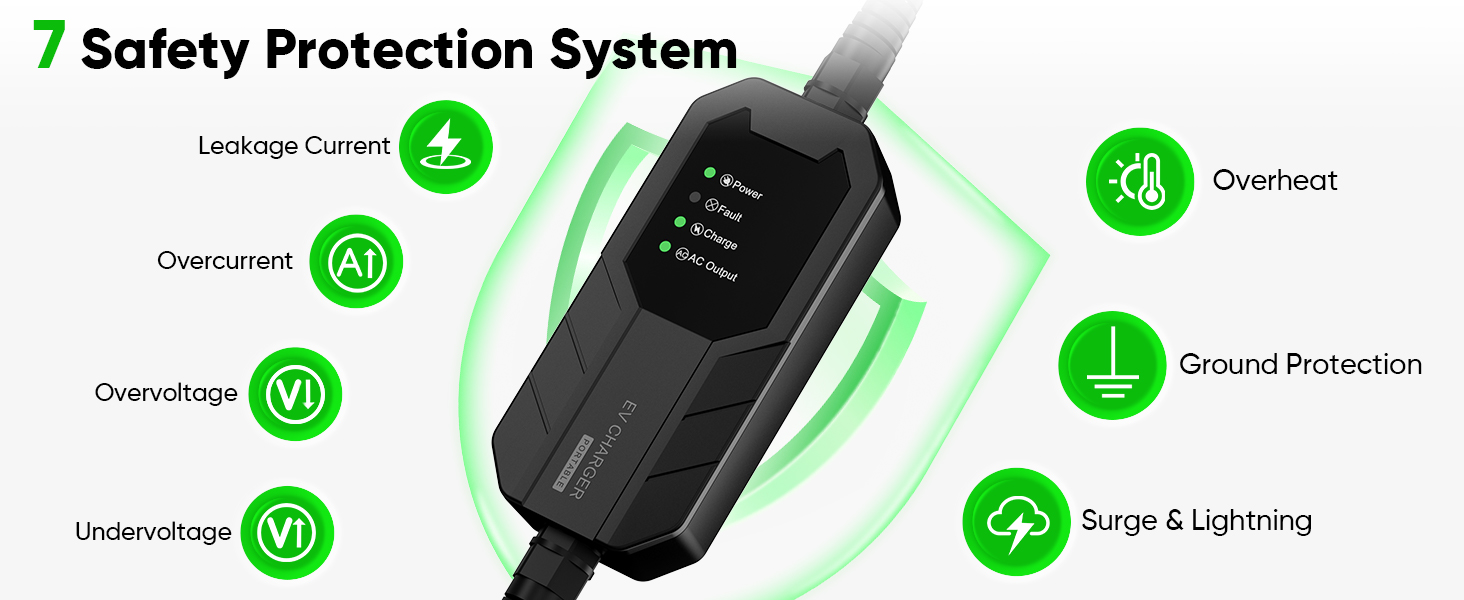
Buy a certified (UL or ETL) unit with over-current, over-temperature, ground-fault, and surge protection. Keep the control box off the ground and store it indoors between uses. Our safety guide has more.
Portables are built for the elements, but a few habits protect them. In freezing weather, charge where the connection stays dry and let the battery warm before any DC fast-charge stop. In extreme heat, keep the control box out of direct sun; most units self-throttle if they overheat. A weather-rated enclosure survives rain and snow, while an indoor-rated unit should come inside between uses.
The MEGEAR Skysword II class of 16A portable is the best all-round buy for most drivers, flexible, affordable, and enough for daily commuting. We recommend a certified 16A portable with both plugs, choosing 17ft for typical parking and 25ft when the outlet is far. Match the plug to your outlet, size the breaker correctly, and you have reliable charging wherever you park.
A 16A portable lives or dies by its specs, so read the label before buying. Confirm the input range covers 100 to 240V if you travel internationally, check the plug type (a 6-20 for 240V plus a 5-15 adapter for 120V is the flexible pairing), and verify the cable is at least 17ft. The control box should list over-current, over-temperature, ground-fault, and surge protection. Certification, UL or ETL, is non-negotiable; an uncertified bargain can overheat or fail safe only sometimes. A clear, correct label is itself a quality signal, and a vague one is a reason to choose a different brand. Spend two minutes on the box and you avoid the most common buyer’s regret.
A 16A portable costs little up front and nothing to install, which makes it the cheapest way into EV charging. The trade is speed: at 13 to 15 miles per hour on 240V it is fine for modest daily miles but slow for a two-car household. A wall charger costs more and needs an electrician, yet it delivers 30 to 40 miles per hour and tidies the cable permanently. For renters and travelers the portable wins; for homeowners who can install, the wall unit pays back in time saved. Many owners keep a portable as a backup regardless, because the day the wall unit needs service, the portable keeps the car moving. View the two as complementary, not competing.
The 16A portable shines in moments a wall charger cannot. You visit family whose only outlet is a 120V garage plug, and you arrive with a full charge the next morning. You park at a rental with a 240V dryer-style 6-20, and you double your overnight range. You lend the charger to a friend with a different brand of EV, and the J1772 standard means it just fits. You keep one in the trunk for a roadside top-up when a destination has power but no charger. These everyday scenarios are why a 16A portable earns a permanent spot in the car even after you buy a faster home unit, quietly removing the friction from owning an EV.
Portables take abuse, so a few habits extend their life. Store the control box indoors rather than leaving it in a hot trunk, keep the connector caps on when not plugged in, and inspect the cable jacket monthly for cuts or stiffness from cold. If the box ever feels hotter than warm, stop and let it cool; certified units throttle by design, but a repeated overheat means a check is due. Wipe moisture from the plug before connecting in rain or snow. None of this is complicated, and an hour of care across a year keeps a 16A portable running safely for the long haul, protecting both your car and your investment in cleaner driving.
Lorem Ipsum is simply dummy text of the printing and typesetting industry
Complete guide to EV charger load management: dynamic load balancing, power sharing, static allocation. Wallbox, Autel, Emporia. Avoid panel upgrades...
Best Level 1 EV chargers for 120V outlet charging. Lectron dual-voltage, Tesla Mobile Connector, Emporia. Tips, costs, safety, when to...
Complete guide to scheduling EV charging: TOU rates, smart charger apps, solar surplus charging, cost savings calculator. Emporia, Wallbox, ChargePoint...




