
Public Charging & Ownership Questions Answered
Will Tesla owners be able to use ONroute’s new CHAdeMO EV chargers?
Tesla vehicles do not natively support CHAdeMO. To use CHAdeMO stations such as those at ONroute, Tesla owners in North America must use a CHAdeMO adapter. Native access requires adapters compliant with the vehicle’s charging hardware and local regulations.
How does EV charger installation work for homes in the UK?
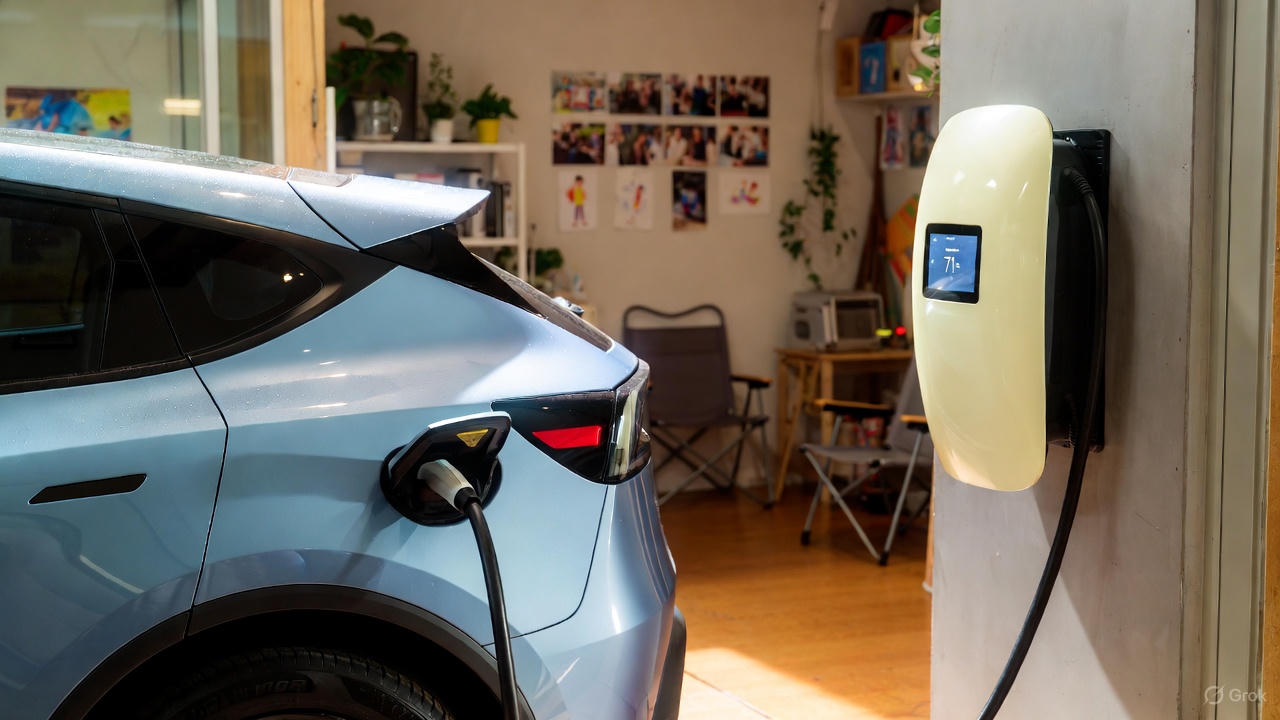
UK home EV charger installation involves: an assessment of electrical capacity, installation of a dedicated 230V AC dedicated circuit, and placement of a suitable EVSE (usually wall-mounted). Installers must be qualified (e.g., NICEIC or equivalent). Domestic installations usually include an RCD, proper earthing, and customer briefing on safe operation and tariff optimisation.
Do Tesla owners have to pay for public EV chargers?
Yes, Tesla owners typically pay for non-Supercharger public charging, depending on the network operator and pricing model. Some locations offer free charging as a promotion. Tesla’s own Supercharger network generally charges per kWh or per minute depending on local regulation.
What strategies help when encountering broken or unreliable EV chargers on long trips?
Recommended strategies include:
- Plan routes using reliable networks (Electrify America, Tesla Supercharger, ChargePoint).
- Check real-time status apps (PlugShare, Google Maps) before arriving at chargers.
- Have backup chargers on your route with similar power levels.
- Allow extra time and miles of buffer (10–20% SOC) to compensate for outages.
Can an EV owner manage without installing a charger if they park/charge indoors nightly?
Yes. If you have consistent overnight parking, relying on workplace or public chargers can work, especially if routine commuting distances are short. However, home charging offers convenience and often lower electricity costs. Many owners find a Level 2 home charger beneficial even with indoor parking.
How does the Ohme Home Pro EV charger compare to other home chargers?
The Ohme Home Pro typically emphasizes smart tariff integration, dynamic load management, and app control. Compared with basic Level 2 chargers, it offers more control over charging cost optimisation. Feature comparisons vary by model and network integration.
How many EV chargers were in the US in 2020?
In 2020, the US had approximately 100,000 public EV charging outlets (Level 1/2 and DC fast), reflecting early national infrastructure deployment. This figure has grown significantly since.
Can you use public charging if your car doesn’t have an EV charger port?
No. A vehicle must have a compatible charging port (J1772/NACS/CCS/CHAdeMO) to connect to public EV chargers. Cars without a charging port (traditional ICE vehicles) cannot use public EVSE.
- Adapters can bridge Tesla to CHAdeMO/CCS but must be supported by the hardware.
- Home installation practices differ by region (UK vs US/EU grids and codes).
- Reliable long-distance planning significantly improves EV trip confidence.
For daily home charging convenience and speed, install a trusted Level 2 EV charger.
View Recommended Home EV Charger


