Public & Commercial EV Charging: Gas Stations, Shopping Malls, Workplaces
A complete, professional overview of the economics, strategy, and expansion of commercial EV charging infrastructure across retail, fuel, and corporate environments.
What are the benefits of installing EV chargers at gas stations?
Gas stations benefit strategically and financially by installing EV chargers:
- New revenue streams: EV charging fees, parking fees, and on-site retail spending.
- Future-proofing: As gasoline demand declines, stations must diversify to remain relevant.
- Higher customer dwell time: EV drivers spend 20–40 minutes on-site, increasing convenience-store sales.
- Government incentives: Federal and state programs subsidize installation costs.
- Brand positioning: Early adopters gain competitive advantage and increased traffic.
Gas stations with EV chargers can increase per-visit store revenue by 35–70%, according to multiple retail studies.
What entity pays for the free EV chargers found in shopping malls?
“Free” mall charging is not actually free — it is funded by:
- Mall owners: Charging is treated as a customer-acquisition cost, similar to free parking.
- Retail tenants: Some contribute through CAM (Common Area Maintenance) fees.
- Government subsidies: Many cities provide grants for commercial EV infrastructure.
- Utility partnerships: Utility companies may provide rebates or reduced rates.
The strategic goal:
EV drivers spend more time and more money during mall visits — charging is a proven method to increase foot traffic and retention.
Why do gas stations face tough, costly choices on EV chargers?
Gas stations face several challenges when transitioning toward EV charging:
- High infrastructure cost: Commercial DC fast chargers can cost $80,000–$250,000 each.
- Limited grid capacity: Many stations require transformer upgrades or new service connections.
- Long ROI period: EV charger profitability depends on utilization, which may be low initially.
- Space constraints: Stations must redesign traffic flow to accommodate EV stalls safely.
- Fuel retailer business model conflict: Longer dwell times reduce vehicle turnover.
The investment is necessary long-term, but short-term economics can be difficult.
Do we need public EV chargers if we have home chargers?
Yes. Even with high home-charging adoption, public charging is essential for:
- Long-distance travel.
- Drivers without home garages (about 30–45% of U.S. households).
- Workplace charging to reduce grid load during evening hours.
- Commercial fleets that require daytime rapid charging.
- Urban environments with limited private parking.
Public charging complements home charging — it does not replace it.
Why is installing an EV charger so expensive compared to the price of the unit?
The charger is often the cheapest part of the project. Costs are driven by:
- Electrical upgrades: breakers, conduits, trenching, panel expansion, transformers.
- Permits & engineering: commercial sites require more detailed design.
- Labor: licensed electricians, concrete work, parking lot modification.
- Networking & software fees: for commercial billing systems.
- Demand charges: utilities charge extra for high-power usage spikes.
For DC fast chargers, infrastructure commonly represents 60–80% of the total cost.
When will we see a bigger rollout of EV chargers throughout the U.S.?
The U.S. rollout is accelerating due to:
- NEVI funding: $7.5 billion federal investment for nationwide corridor fast charging.
- NACS adoption: Simplified connector standards reduce infrastructure complexity.
- Utility partnerships: New incentive programs for commercial sites.
- Retail adoption: Walmart, Target, BP, Shell, Pilot, and major mall groups adding chargers rapidly.
Significant density increases are expected from 2025–2030, with coverage similar to today’s gas-station network by the early 2030s.
Recommended High-Quality Level 2 Charger for Businesses & Workplaces
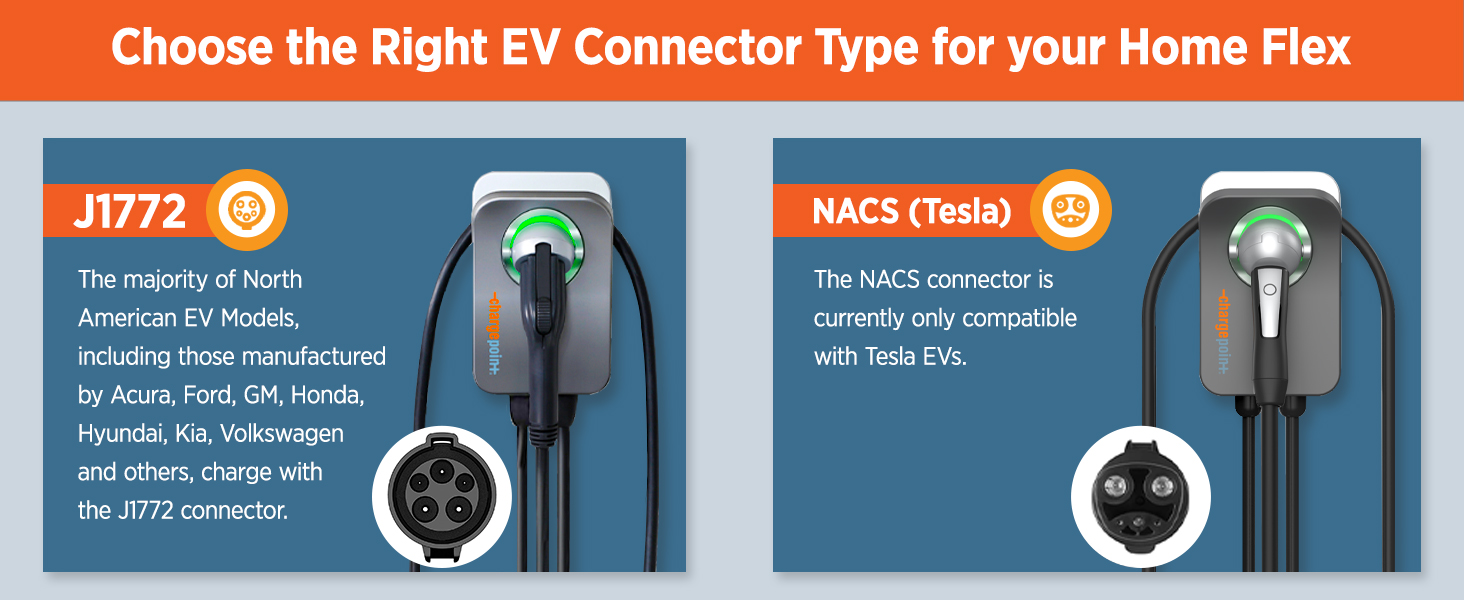
ChargePoint HomeFlex Level 2 — durable, network-capable, UL-certified, suitable for light commercial or workplace use.
View on Amazon